

It’s easy to dismiss or undervalue the P.L.E.’s importance. We are, after all, talking Primary School. In my part of the world (Ontario, Canada), there are no equivalent national or provincial “final” exams that determine who gets to move on to high school. Everyone, it seems, gets promoted. Yes, elementary students are exposed to multiple literacy and numeracy tests but their score results don’t seem to stick to them. At the end of Grade 8 (again, we are talking Ontario, Canada) everyone “graduates.”
In Uganda, the story is quite different.
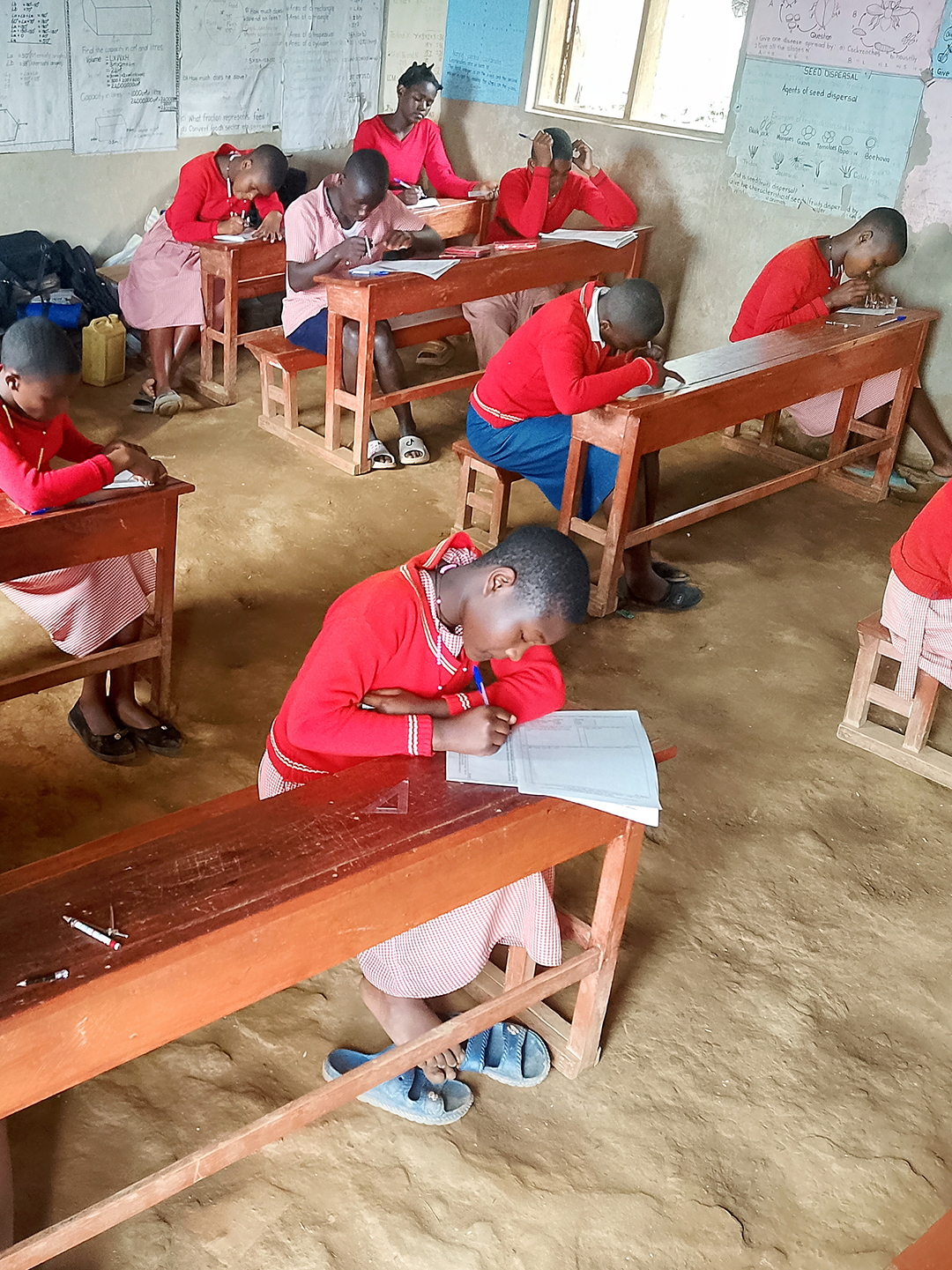
Students take part here in multiple timed mock examination sessions that happened throughout October. They work through various questions to feel comfortable and confident facing the November exam.
What is the P.L.E.?
The P.L.E. or Primary Leaving Examination is a nationally administered standardized exam, written over multiple days in November each year. It marks the completion of Primary 7 which is the final year of primary (or elementary) school. Typically, around 700,000 to 750,000 students sit for the exam each year. Students must pass this exam in order to attend secondary education.
What gets tested?
Students are tested in four core subjects: English Language, Mathematics, Science and Social Studies (which includes religious education as well as elements of civics, history and geography.) Each subject area is graded on a scale of 1 (best) to 9 (worst). The total of the four subjects is the student’s aggregate score. This means the best possible score is 4, the worst is 36.
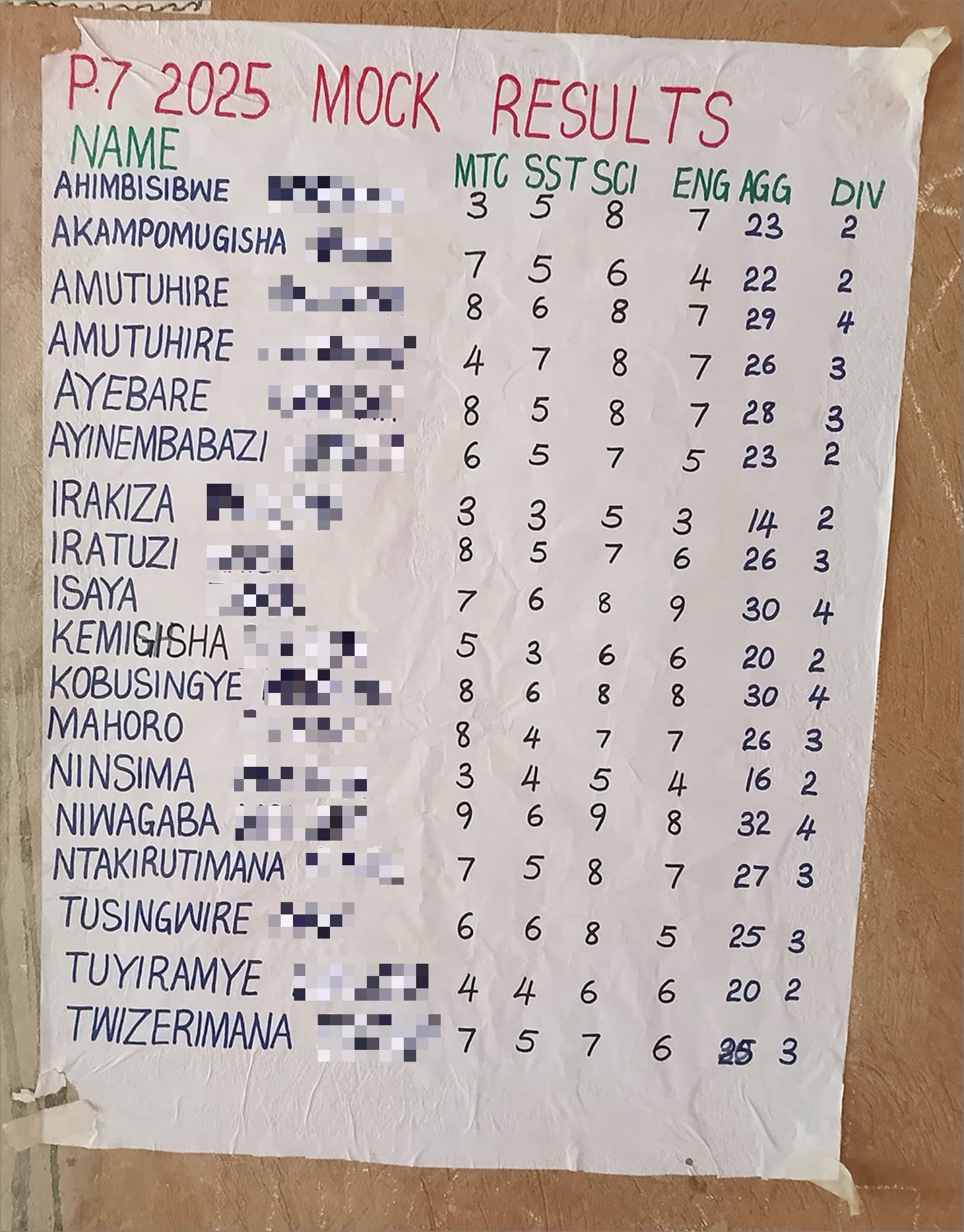
Seeing the results on this board helps both students and staff members at St. Peter’s Primary School understand the particular areas that need extra time and study.
How is it scored?
After the aggregate score of the student has been calculated, students are assigned to one of 5 possible grading divisions.
- Division 1 (aggregate of between 4-12) is Excellent.
- Division 2 (13-23) is Good.
- Division 3 (24-29) is Fair.
- Division 4 (30-34) is the minimum pass.
- If your aggregate score is 35 or above, you are assigned a Division U. You have not passed the P.L.E.
When will we know the Results?
National exam results are usually available in late January or early February of the following year.
Does everyone pass?
In 2024, the P.L.E. pass rate in Uganda was 91.8% which means that 8.2% of students did not pass. If you consider the 2023 results as well, roughly 8-12% of students do not pass the P.L.E. Girls outnumber boys among candidates but boys tend to have slightly higher pass rates. Urban schools tend to outperform rural schools. For the past several years, St. Peter’s has had a 100% pass rate.
Associated Costs
Even though St. Peter’s does not receive any government funding (it is a community owned and operated school) students are obligated to write the national P.L.E. if they wish to attend high school and further their education. The fee (106,000 UGX) to write the P.L.E. is roughly $30 USD / $42 CAD. In St. Peter’s case, parents pay 90% of the fee and the school pays the rest.
Exam Timetable
Students do not write the exam in their own classrooms. The 18 St. Peter’s students who will write this year’s exam must walk 4.5 km to the nearest testing centre accompanied by the school’s Head Teacher. Here is what their Exam schedule will be:
Day ONE
Nov. 3 | Morning: Mathematics | Exam length: 2h 30m
Nov. 3 | Afternoon: Social Studies | Exam length: 2h 15m
Day TWO
Nov. 4 | Morning: Science | Exam length: 2h 15m
Nov. 4 | Afternoon: English Language | Exam length: 2h 15m
So, for all of the above reasons, the P.L.E. is a big deal in Uganda. But it is also a big deal for St. Peter’s Primary School.
It’s a Big Deal!
As you may already know, St. Peter’s is located in the south-west corner of the country. Were it not for the presence of the nearby famed mountain gorillas, many foreign visitors would probably never see this part of the country. It is largely rural and families are dependent on the income generated from tending small farming plots. Climate change and unpredictable market prices make long term planning almost impossible. The average household size in this area of Uganda is about 5+ people. Average family income per month (500,000 to 900,000 UGX) ranges from $135 to $240 USD. In this context, finding the money to pay the fee so that your child can write the national exam, can be a challenge.
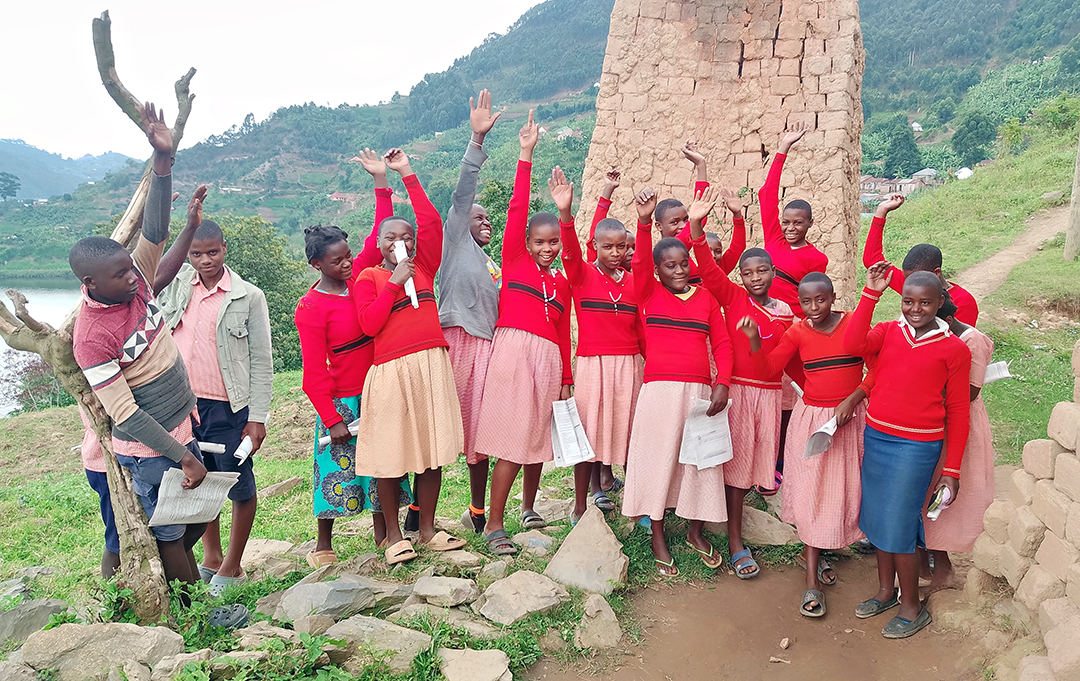
These are some of the 18 students at St. Peter’s who will be writing the P.L.E. in early November. We wish them all the best.
The P.L.E. is a big deal for St. Peter’s as well. The school’s 100% pass rate on the P.L.E. for the past several years means that many parents want to send their children to St. Peter’s because of the excellent instruction they will receive there. As a result, class sizes have increased tremendously which threatens student learning and teacher effectiveness. Already limited resources get stretched to the limit. The school has plans to expand their classroom space but not enough funds to make that happen at this time. Their instructional excellence and their enviable success in the national P.L.E. has created several long term challenges for the school. How do you keep your standards high while meeting the needs of an increasing number of students, with few options to meaningfully increase your revenue and build new much needed classroom spaces?
And, lastly, let we forget, continuing education remains one of the few proven vehicles still capable of breaking the cycle of poverty as it impacts both families and the surrounding community. Education reveals unimagined opportunities that would otherwise remain hidden to those denied access to a classroom. Education lifts all boats in this community.
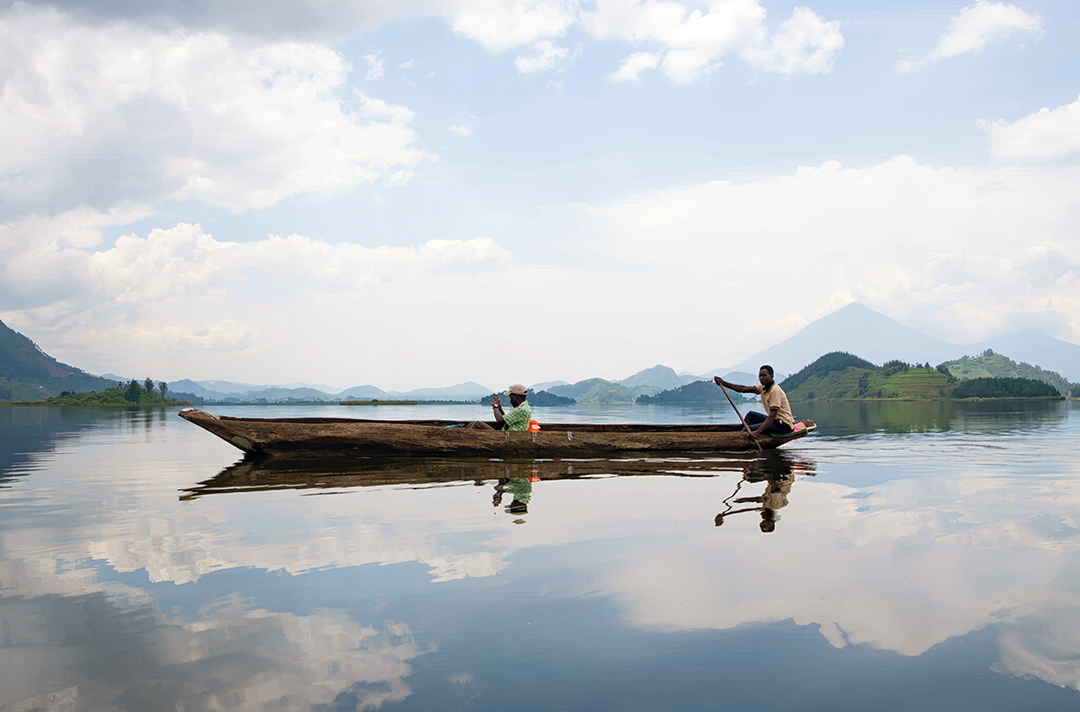
It must he hard to keep your mind on your studies when you have such magnificent visual distractions outside your classroom window. Fishermen on Lake Mutanda.
Recent Comments